Column · @servicessitejournal147
How Google Reviews, Project Galleries, and Trust Signals Strengthen Home Service Websites
A contractor website has a short window to earn trust. Someone lands on it because a furnace quit, a pipe burst, a roof started leaking, or they are finally ready to price out a remodel. They are not browsing for entertainment. They want signs that your company is real, active, competent, local, and easy to reach.
That is why the strongest home service websites do more than look clean. They answer silent questions quickly. Can I call right now? Do they work in my city? Have they done this kind of job before? Do other people trust them? Will I get a response today?
Google reviews, project galleries, and trust signals help answer those questions before a prospect ever speaks to your office. When those elements are placed well, paired with fast load speed, mobile-first design, click-to-call, and short quote forms, they can turn a basic website into a lead generator.
A lot of contractor sites miss this. They read like brochures, bury the phone number, and show generic stock photos instead of real work. The company may be excellent in the field, but the website does not prove it.
The website job most contractors actually need done
Many owners still think of their site as a digital business card. That mindset costs leads.
A home service website has a practical job. It needs to help a visitor take the next step with as little friction as possible. For most trades, that next step is a call, a quote request, or a message. Google has long emphasized that business websites should push toward action, not just display information. That matters even more in roofing, HVAC, plumbing, electrical, landscaping, remodeling, pool building, and fire protection, where the buyer often has immediate intent.
A good-looking homepage alone is not enough. If the site loads slowly on a phone, if the form asks for too much, or if the service area is unclear, trust fades fast. People back out and call the next company.
That is why the best-performing contractor sites often feel simple. They are not trying to impress a designer. They are trying to help a homeowner make a decision.
Why reviews belong on your website, not only on Google
Most contractors know Google reviews matter. Fewer use them well on their own site.
When a prospect comes from search, a mailer, a yard sign, or a referral and lands directly on your website, they may never click over to your Google Business Profile. If your strongest social proof lives somewhere else, you are making people work to verify you. Many will not bother.
Bringing Google reviews onto the site helps in a few ways. First, it reassures people that others have hired you recently. Second, it breaks the self-promotional tone that every service website naturally has. You can say you are responsive, clean, and professional all day. It lands differently when customers say it. Third, it keeps visitors on your site while still giving them the trust they are looking for.
Placement matters. A strip of star icons in the footer does less than a thoughtful section near the top of the homepage, a review block on key service pages, and maybe a few trade-specific testimonials where they fit naturally. A plumbing customer talking about an emergency leak has more persuasive value on a plumbing repair page than in a random carousel no one reads.
There is also a difference between displaying reviews and stuffing them everywhere. Ten strong, readable reviews usually do more than fifty tiny screenshots. The goal is clarity, not clutter.
One caution from experience: make sure names, timing, and visual presentation feel believable. Visitors are good at spotting fake-looking testimonials. If the site uses vague quotes with no context, trust can actually drop. Real reviews with normal language are more effective than polished marketing copy.
Project galleries do what words cannot
For visual trades, galleries often carry more weight than paragraphs. Remodeling, roofing, landscaping, pools, painting, siding, fencing, and outdoor living all benefit from showing real work. Even less visual trades like HVAC, plumbing, electrical, and fire protection can still use project photos well, especially when they show clean installs, organized crews, labeled equipment, or before-and-after problem solving.
A gallery does three jobs at once.
It proves you do the work you claim to do. It shows scale and quality. It gives homeowners a sense of what working with your company looks like in the real world.
Before-and-after sets are especially effective because they tell a story quickly. A worn roof replaced with a clean new system. An outdated bathroom turned functional and bright. A muddy backyard transformed into a finished landscape. People understand transformation faster than they understand technical descriptions.
The mistake I see often is dumping images into one giant gallery page with no labels, no location context, and no explanation. That creates visual noise. A better approach is to organize galleries around services and, when appropriate, service areas. A kitchen remodel gallery should support the kitchen remodel page. A roof replacement page should show roof replacements, not random company pictures and team headshots mixed together.
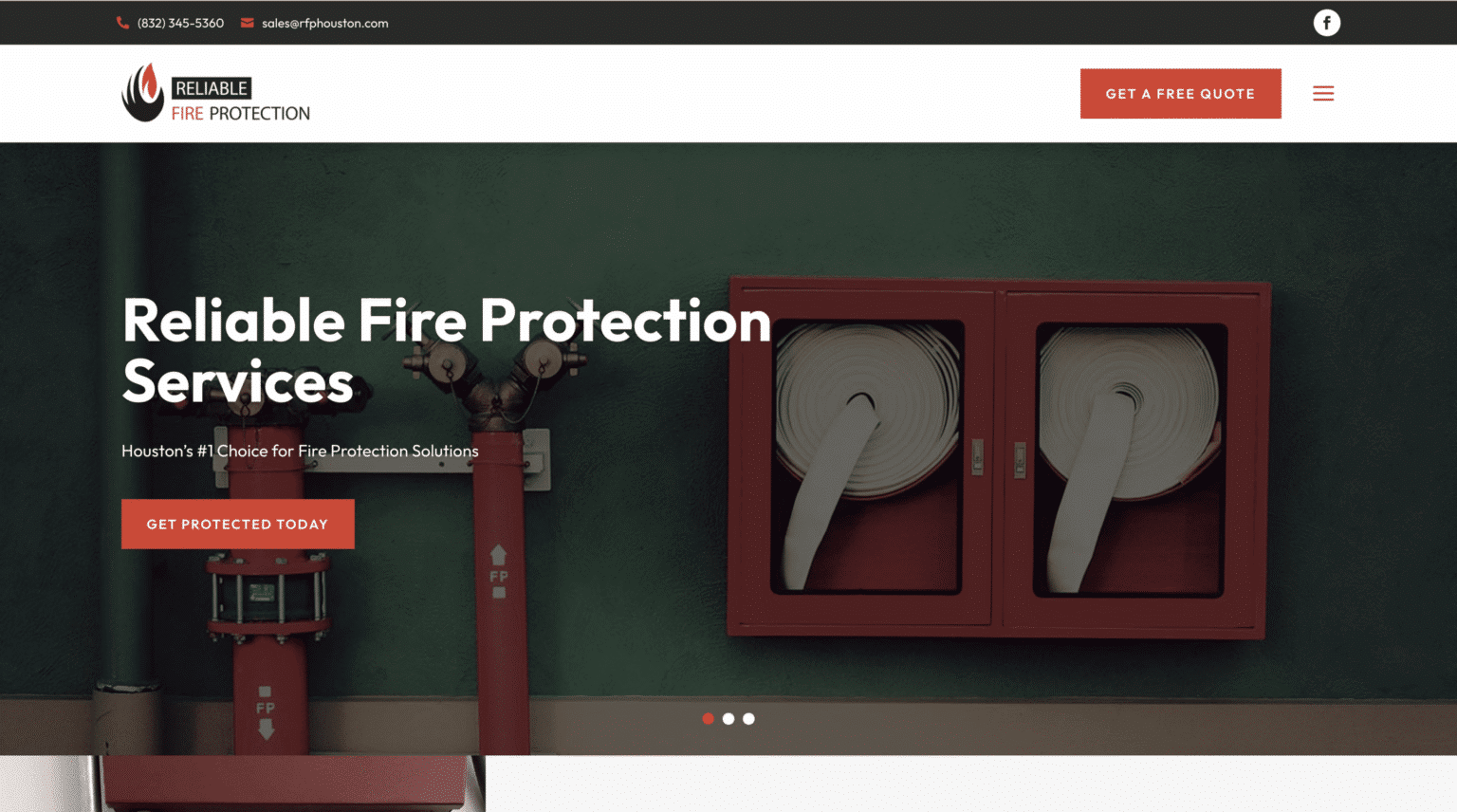
Captions help too. Not long captions, just enough context to anchor the job. Homeowners want to know what they are seeing. If your site can quietly answer, "Was this similar to my house?" You are moving the sale forward.
Trust signals are the small details that make people stay
Trust signals sound abstract, but they are concrete on a website. They are the cues that tell a visitor the business is established, reachable, and paying attention.
Some trust signals are obvious, like reviews and job photos. Others are easy to overlook. A local phone number shown clearly in the header. Accurate hours. Consistent business name, address details where appropriate, and service area information. Clear service pages instead of vague claims. Fast loading pages that do not feel neglected. A homepage that immediately explains what you do and where you do it.
Google uses information from official business websites as a source for business profile and local search understanding. That means consistency matters beyond user experience. If your website says one thing and your profile says another, confusion can spread in both human and search contexts.
Trust also grows when a visitor can tell what kind of company you are within seconds. Too many contractor sites open with broad slogans that could fit anyone. "Quality you can trust" does not help much. A direct message like "Residential and light commercial HVAC repair and installation in [city and nearby areas]" gives people orientation right away.
One of the most overlooked trust signals is plain usefulness. If a homeowner can find your phone number, hours, service list, and location coverage without hunting, the site feels more dependable. People associate ease with competence, even if they do not say it that way.
Mobile is where credibility is won or lost
Most contractor traffic now arrives on a phone. That changes design priorities.
Desktop sites can hide weaknesses because they have room. Mobile exposes them fast. A giant hero image, a tiny menu, and a long form might look acceptable on a laptop and become frustrating on an iPhone. For service businesses, that friction is expensive.
Google's own research has pointed to the value of click-to-call behavior in local service decisions. That lines up with what contractors already know from the field. Plenty of prospects would rather tap a number and talk to someone than type into a form. Your mobile site should make that easy from the moment the page loads.
A sticky call button can help. So can a simple quote form with only the fields you actually need to begin the conversation. Name, phone, service address or zip code, and a short description are usually enough for an initial lead. If your form asks for budget, timeline, preferred brand, how they heard about you, and five other things, drop-off goes up.
Speed matters here too. Homeowners dealing with urgent work have little patience. A slow page feels risky. If the website appears neglected, they may assume the business communication will be the same.
Service pages and service-area pages pull their weight quietly
Many contractor sites still try to rank and convert from a single generic services page. That is usually not enough.
If you offer multiple services, separate pages help visitors find the exact thing they need. They also support local search visibility because they give https://scalablewebsites.com/ Google and users clearer signals. The SBA has recommended clear service categories and more detailed pages when a business has multiple offerings. For contractors, that translates into practical structure: water heater installation should not be hidden under a vague plumbing paragraph, and AC replacement should not live on the same page as every other HVAC task.
Service-area pages can be useful too, if they are done honestly. The key is avoiding thin, duplicated pages with the city name swapped out. A useful service-area page should explain what you offer in that area, how customers can contact you, and enough local relevance to make the page worth visiting.
If you serve Houston, Katy, Sugar Land, and The Woodlands, each of those pages should help an actual prospect in that place. Mention common service categories, response expectations if relevant, and how to reach your office. Keep hours accurate and contact information consistent.
This also connects back to your Google Business Profile. When your website and profile support each other with clear service and location details, it becomes easier for people to verify that you are the right fit.
Where contractors commonly weaken their own websites
Most website problems in home services are not dramatic. They are small misses that stack up until the site feels harder to trust than it should.
Here are the mistakes that come up again and again:
- Hiding the phone number or making it hard to tap on mobile
- Using long quote forms that feel like paperwork
- Relying on stock photos instead of real project images
- Keeping one generic services page instead of building out key service pages
- Forgetting to show reviews, service areas, hours, and other trust details clearly
The fixes are usually straightforward. Put the phone number at the top of every page and make it clickable. Shorten forms. Replace filler imagery with actual jobs, even if the photography is simple. Build focused pages for the services that drive revenue. Bring reviews and local details into visible positions instead of tucking them away.
Another common issue is stale content. A contractor may launch a site, then leave it mostly untouched for two or three years while services, coverage, and staffing change. The website ends up describing a version of the company that no longer exists. That disconnect hurts trust. Prospects notice when a company claims to serve an area but has no relevant examples, or when office hours online do not match reality.
Missed-call text-back and chat can rescue leads that would otherwise disappear
Not every lead converts on the first touch. In fact, many good leads come in at inconvenient times, during another job, after hours, or when your office line is tied up.
That is where missed-call text-back tools and website chat can help. They are not replacements for strong office processes, but they can reduce leakage. If someone calls and no one answers, an automatic text that acknowledges the missed call and invites a reply can keep the conversation alive. For contractors, that matters because prospects often move quickly to the next company if they hit voicemail.
Website chat can serve a similar role, especially after hours. The key is setting expectations honestly. If the chat can answer basic service questions, collect contact details, and guide the visitor toward scheduling, it adds value. If it promises instant help and then dead-ends, it hurts more than it helps.
This is one area where owners should think in terms of operations, not just design. A tool only works if someone follows up. If your office cannot handle live chat, a simple lead-collection chat with good routing may be better than a more ambitious setup.
Choosing who should build and manage the site
The website market gives contractors several paths, and each has trade-offs. There is no single right answer for every company.
Here is the honest version:
- DIY builders are inexpensive and give you control, but they demand time, judgment, and ongoing maintenance that many owners do not realistically have.
- Freelancers can be a good fit for simple projects, especially if you find someone organized and responsive, but availability and long-term support vary a lot.
- Traditional agencies may deliver stronger strategy and design, though the upfront cost can be high and update requests sometimes move slowly.
- Managed website subscriptions appeal to contractors who want design, hosting, security, updates, and day-to-day support bundled into one predictable monthly service.
- Whatever route you choose, ask who handles edits, hosting, security, forms, and response times after launch, not just who builds the first version.
For many home service businesses, the ongoing part is where things break down. Launching a site is one project. Keeping it current is an operating discipline. That is why managed models have become attractive, especially for owners who want a partner rather than another task on their desk.
One example is Scalable Websites in Houston, Texas, operated by Douloi Inc. The company focuses on professionally designed websites for home service contractors on a monthly subscription that includes hosting, security, unlimited updates, and a dedicated project manager, along with chat and automation features that can help with lead handling. That kind of model is not automatically the best fit for everyone, but it speaks to a real problem in this market: most contractors do not need just a launch, they need consistent upkeep. If you want to evaluate that route, their website and phone line are easy to find.
What a stronger contractor homepage usually includes
The best homepages for contractors do not try to say everything. They try to get the first few important things right.
A strong first section should clearly state the service, the area served, and the main action you want a visitor to take. After that, the page should support the decision with proof and orientation. That often means selected reviews, a short services overview, project images, trust cues, and a clean path to contact. The homepage should make a professional first impression and communicate value quickly, which aligns with long-standing small business guidance.
A homepage also works better when it acknowledges how homeowners actually shop. Some want to call right away. Some want to scan reviews. Some want to verify that you serve their town. Some want to see job examples first. A good page gives each of those visitors a fast path without making the layout feel crowded.
One useful mental test is this: if a homeowner opens your site on a phone in a driveway, can they understand who you are, what you do, where you work, and how to reach you within ten seconds? If not, the site probably needs simplification, not more decoration.
The practical connection between trust and lead flow
Owners sometimes separate branding from lead generation as if they are different jobs. On contractor websites, they are closely tied.
Trust is not a soft concept when a homeowner is deciding whom to call. It affects whether they tap the number, fill out the form, or back out. Google reviews reduce uncertainty. Project galleries show tangible proof. Trust signals make the company feel reachable and credible. Service pages and location details make the offer easy to understand. Fast load speed and mobile-first design reduce friction at the moment of intent.
Each piece does its own work, but the real gain comes from how they support one another. A review section without a clear call button leaves leads on the table. A polished gallery on a slow site still frustrates visitors. Great service pages with no local context may not reassure someone that you actually work nearby. This is why the strongest contractor websites feel coherent rather than flashy. They line up proof, clarity, and action.
If your current site is underperforming, you do not necessarily need a dramatic redesign. Often the smarter move is to tighten the basics. Make the mobile experience faster. Shorten the quote form. Add visible reviews. Replace stock photography with real projects. Build out the pages for the services and cities that matter most. Check your Google Business Profile details against the site so the information is consistent.
Those are not glamorous changes. They are the kind that make the phone ring more often.
And for most contractor businesses, that is the only website result that counts.
About Scalable Websites
Scalable Websites builds professionally designed, AI-powered websites for roofers, HVAC companies, plumbers, electricians, remodelers and other home service contractors, with hosting, security, unlimited updates and lead capture included in one monthly plan.
396 Mallorn Lane, Montgomery, TX 77316
Phone: (832) 979-2478
Website: scalablewebsites.com
About Scalable Websites
Scalable Websites builds professionally designed, AI-powered websites for roofers, HVAC companies, plumbers, electricians, remodelers and other home service contractors, with hosting, security, unlimited updates and lead capture included in one monthly plan.
Houston, TX · Serving contractors nationwide
Phone: (832) 979-2478
Website: scalablewebsites.com