Column · @servicessitejournal147
HVAC Website Design: How Mobile-Friendly Pages Help Capture More Service Leads
A lot of HVAC companies still lose leads for a simple reason: their websites make it harder than necessary to get in touch.
That problem shows up in small, expensive ways. A homeowner’s AC quits on a hot afternoon, they search on their phone, tap into a site, and wait. The page drags. The phone number is buried. A pop-up covers half the screen. The contact form asks for too much. Within seconds, they back out and call the next company.
That is the real stakes of HVAC website design. It is not mainly about looking modern. It is about removing friction between a stressed customer and your service team.
Google’s own guidance points in the same direction. For contractor and home service website design, the basics matter: make key information easy to find above the fold, keep navigation simple, avoid heavy pop-ups, and make mobile pages load fast. That fits how people actually shop for repair services. They are often in a hurry, often on a phone, and usually ready to contact someone before they are ready to read every line on your About page.
For HVAC businesses, mobile-friendly design is not a nice extra. It is the part of the site that determines whether your traffic turns into calls, form submissions, or nothing at all.
The mobile moment happens before trust is fully formed
Most service calls do not begin with deep brand loyalty. They begin with need.
A furnace stops working at night. A condenser freezes up. A thermostat fails during a heat wave. The customer is not comparing ten detailed proposals at that stage. They are trying to answer a narrower question: who can help me quickly, and do I trust them enough to reach out?
That means your site has to do two jobs at once. First, it has to reassure. Second, it has to reduce effort. If it only does one, leads slip away.
A strong contractor website design for HVAC companies usually gets this balance right by surfacing the essentials early. The visitor should not need to scroll far to find your phone number, service area, core services, and a direct path to request help. Google explicitly recommends keeping key information above the fold and making actions take as few steps as possible. For an HVAC company, that can be the difference between a booked call and a lost one.
I have seen this same pattern across home services, not just in HVAC website design. The same principles tend to carry over to plumbing website design, electrician website design, and even roofing website design. When someone needs a tradesperson fast, they reward clarity.
Why phone-first design matters more than desktop polish
Many contractors still review their own websites from a laptop in the office. That creates blind spots. A page can look clean on a wide monitor and still perform badly on a phone.
On mobile, every design choice feels more consequential. Space is tighter. Patience is shorter. Typing is annoying. Buttons need to be easy to tap. Text must be readable without pinching and zooming. Calls to action need to appear at the right moment, not get pushed below a giant hero image or a wall of copy.
Google’s guidance for mobile pages is practical, and it aligns well with lead generation websites for contractors. Pages should load fast. Forms and actions should take as few steps as possible. Responsive design matters because so many searches happen on phones. Under mobile-first indexing, pages that are difficult to crawl, slow, or inconsistent can also create visibility problems.
That matters because poor mobile performance creates two losses at once. You lose conversions from people who do find the site, and you can lose search visibility if your mobile experience is weak enough to create indexing or usability issues.
A good HVAC site does not ask visitors to fight the interface. It gives them one obvious path forward.
What the best HVAC service pages do right
When an HVAC page works, it usually feels almost boring. That is a compliment.
The page opens quickly. You see the business name, what they do, where they work, and how to contact them. Navigation is simple. Nothing jumps around. There is no oversized interstitial begging for an email address before the visitor even knows whether you service their neighborhood.
This is where website design for contractors often goes off track. Some sites try to impress with animation, oversized video headers, or stacked pop-ups. In practice, those choices can get in the way of the main outcome: generating a lead.
The highest-value mobile elements tend to be straightforward:
- a visible phone number that is easy to tap
- a short quote or service request form
- clear service area information
- simple navigation to major services
- trust signals such as reviews and real job photos
None of that is glamorous, but it is effective because it matches user intent.
For HVAC companies, service pages should also reflect the urgency and specificity of the job. A visitor looking for AC repair is in a different mindset from someone researching a full system replacement. One wants speed and reassurance. The other may want more detail before reaching out. A mobile-friendly site should support both, without forcing everyone through the same long path.
Above the fold is where many leads are won or lost
Google recommends putting key information above the fold, and that advice is especially useful in contractor web design.
For HVAC, the first screen on mobile should answer basic questions immediately. Can you help me? Do you work in my area? How do I contact you right now?
If the first screen is dominated by a generic tagline and a stock photo of a smiling family, the site is wasting precious attention. People came for service information, not atmosphere.
A better approach is to make the opening section practical. State the service clearly. Mention the service area. Put the phone number and request option where they are hard to miss. If your team offers messaging or booking options, those can help too, especially when the phone is not answered. Google notes that messaging and booking can increase the likelihood of receiving leads in those moments.
That last point matters more than many contractors realize. A lot of service demand happens outside normal office rhythms. If someone lands on your site after hours and cannot quickly start a conversation, you may never hear from them. A mobile-friendly messaging option can catch leads that would otherwise disappear.
Shorter paths create more inquiries
There is a temptation to ask for a lot in a lead form. Full address, system type, budget, appointment preferences, long descriptions of the issue. The problem is that every extra field adds resistance.
Google’s guidance supports taking as few steps as possible for mobile actions. For HVAC websites, that often means keeping the first conversion simple. Name, contact info, maybe service type and a short message. Get the conversation started. Gather the rest later.
This is one place where lead generation websites for contractors either shine or stumble. A site should not treat every inquiry as if it is a completed intake packet. On mobile, the first goal is contact, not paperwork.
The same thinking applies to navigation. If a homeowner has to tap through three menus to find emergency repair, the path is too long. If they cannot tell whether you serve their city without digging through a footer, the path is too long. If the number is only on the contact page, the path is too long.
Good home service website design trims these moments down.
Trust on a small screen has to be immediate
Trust looks different on mobile. People do not always read long brand stories before deciding to call. They scan for evidence.
That is one reason reviews matter. Google Business Profile includes reviews for service businesses, and Google encourages businesses to read and reply to them. On your own website, prominently showing reviews can reinforce trust for local prospects who are still deciding whether to reach out.
Real photos help too. Google’s Local Services Ads guidance highlights photos, and the support for photo quality there reflects a larger truth: actual project images carry more weight than generic visuals. For HVAC contractors, that could mean showing real installs, equipment, technicians, and before-and-after job conditions where appropriate. It signals that this is a working business, not a placeholder website.
There is a practical point here for contractor website design. Trust signals need to be integrated into the mobile experience, not buried on a separate testimonials page that few visitors will open. A short review snippet, a recognizable service area mention, and authentic photos near the main call to action can do more work than a beautifully designed but isolated review section.
Local relevance is part of design, not just SEO
A lot of people treat local SEO for contractors as if it lives entirely off-site, inside directories and business listings. That is too narrow.
Your website is part of how you confirm local relevance. Google Business Profile allows service-area businesses to define their service area, choose the right category, and show their website on the profile. That means the site people click from your profile should immediately support what they expected to see.
If your profile says you serve a defined area, your site should not feel vague about location. If the profile category points to HVAC services, the landing page should not make the visitor hunt for those services. Consistency matters, especially under mobile-first indexing, where mobile usability and site structure affect how Google processes the site.
This is one reason websites for contractors should be built with local intent in mind from the start. The customer often begins on a local search result, scans a profile, reads a few reviews, and taps through to the website. Every step should feel connected. If the site looks disconnected from the business profile, confidence drops.
That does not require elaborate design. It requires good alignment.
Scalable Websites website designPop-ups, heavy design, and other things that quietly hurt lead flow
Some design mistakes are obvious. Broken forms. Tiny text. Missing phone numbers.
Others are subtle. They do not make the site unusable, but they chip away at response rates.
Heavy pop-ups are a common one. Google advises avoiding them, and that makes sense on mobile. When the screen is small, anything intrusive feels larger. A pop-up asking users to subscribe before they even know your service area is not just annoying, it interrupts the one action that matters.
Overbuilt pages can cause the same problem. Large media files, layered animations, and complicated scripts may look sophisticated during a presentation, but mobile visitors pay the price if the page loads slowly. Google’s mobile guidance is plain on this point: slow pages lose visitors.
There is a trade-off here. Visual polish can help credibility, and no contractor wants a site that feels outdated or sloppy. But in service businesses, performance usually beats theatrics. The best contractor web design company for a trades business is rarely the one chasing the flashiest layout. It is the one that understands how homeowners behave under pressure.
What to prioritize if your HVAC site needs work
If an HVAC website is underperforming, I would start with the customer’s first sixty seconds on mobile. That is where the biggest friction usually sits.
Ask practical questions. Does the page load quickly on a phone connection? Can you call with one tap? Is the top section clear about services and service area? Is there a fast route to request service? Are reviews and real photos visible? Can after-hours visitors send a message without effort?
Those questions sound simple because they are simple. Simplicity is often what produces more leads.
A contractor web design company that works in the trades should be able to talk through these details clearly, not just show design mockups. In my experience, the stronger firms think in terms of conversion paths as much as visual style. They understand that HVAC website design has more in common with dispatch efficiency than with brand theater.
That is also where contractor website cost needs honest framing. A cheaper site can be expensive if it loads slowly, hides key information, or creates mobile friction that costs leads. A more polished site can also be overpriced if it focuses on aesthetics while missing the basics of contact flow. Cost only makes sense in relation to function.
Mobile-friendly pages support paid and organic traffic alike
A well-built site does not just help with unpaid search traffic. It also helps if you are sending people from ads, business profiles, or local service placements.
Google’s guidance for contractor and home service websites stresses direct contact options and fast mobile performance. Those are exactly the conditions needed when someone clicks with strong intent. Paid traffic is less forgiving than general browsing traffic. If you pay to bring a prospect in and the page stumbles, the waste is immediate.
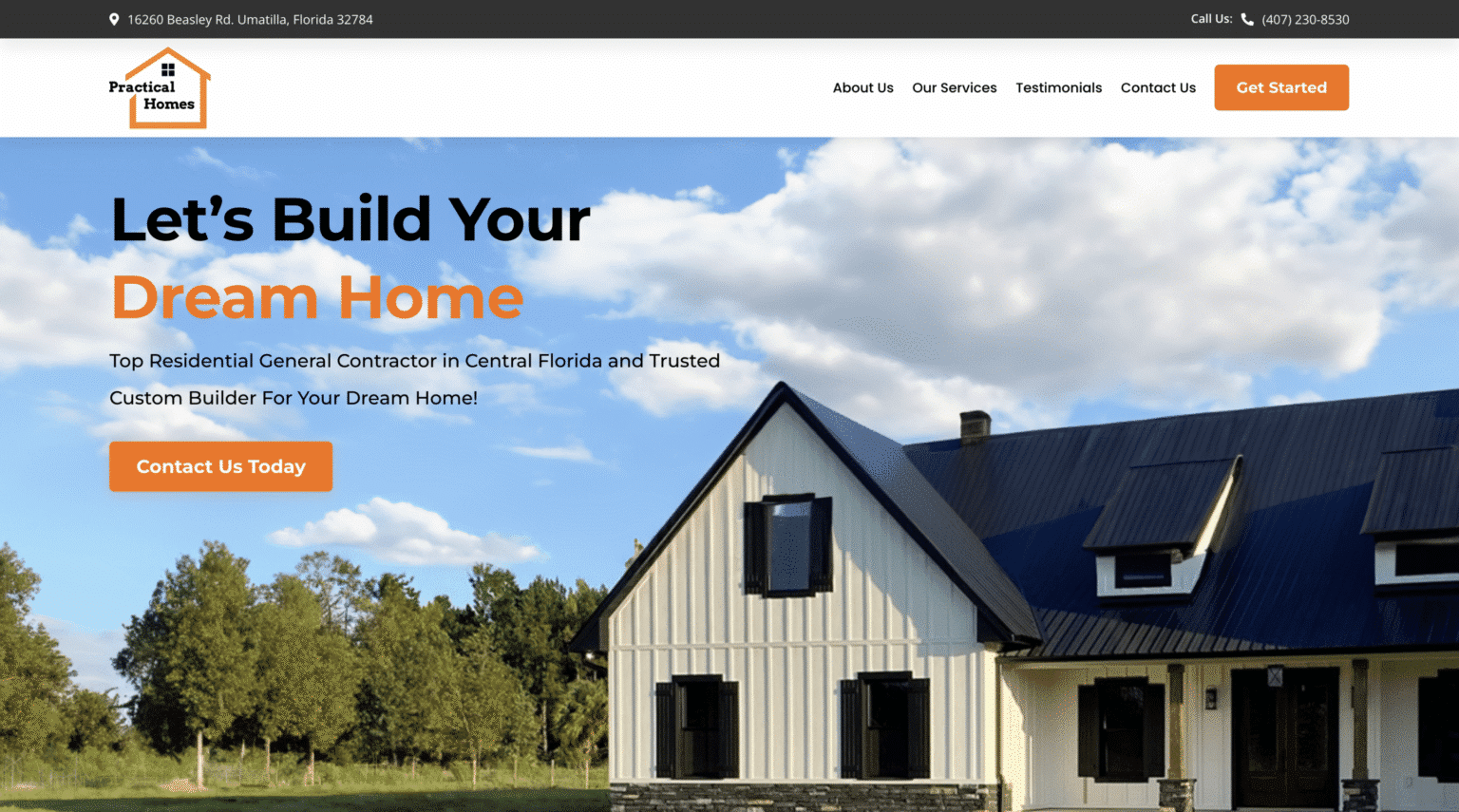
This is why lead generation websites for contractors tend to share a common trait: they respect urgency. They do not assume the visitor wants a tour. They assume the visitor wants help.
For HVAC companies, that often means building pages that support several high-intent paths at once. A phone-first visitor should be able to call instantly. A quieter prospect should be able to submit a short form. Someone who lands after hours should be able to message. Each path should feel easy on a mobile screen.
The same principles work across the trades, but HVAC has its own urgency
There is plenty of overlap between HVAC website design and other trades. Good plumbing website design also benefits from tap-to-call buttons, simple navigation, and local service clarity. Electrician website design needs the same mobile discipline. Roofing website design often benefits from project photos and visible trust signals.
Still, HVAC has a specific challenge: comfort failures are often time-sensitive and emotionally charged. A broken heater in winter or AC in summer puts households under stress fast. That urgency changes how people use the site. They are less tolerant of friction and more likely to choose the company that feels easiest to reach.
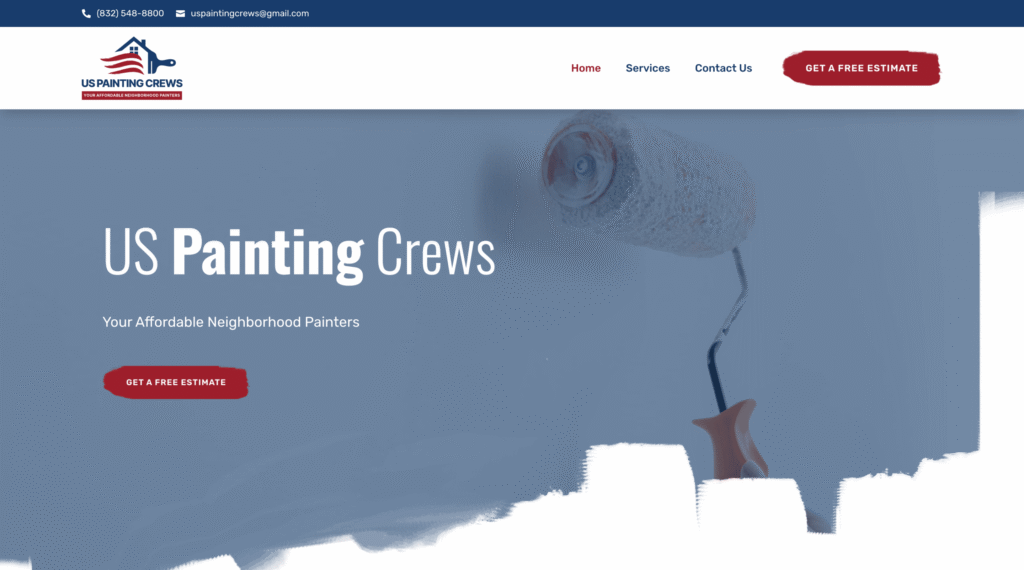
That is why websites for contractors in the HVAC space should lean even harder into clarity. The mobile page should lower stress, not add to it.
Choosing what belongs on the page, and what does not
One of the hardest parts of website design for contractors is deciding what to leave out.
Contractors are often close to their businesses in a way that makes every detail feel important. Years in business, service philosophy, maintenance plans, product brands, financing language, hiring notices, certifications, community involvement, and a full company story can all matter. The question is not whether those items have value. It is whether they deserve top billing on a mobile page meant to capture a service lead.
Usually, they do not.
That does not mean the information should disappear. It means it should be arranged by priority. Immediate service actions come first. Trust reinforcement comes next. Broader company information can support the visitor once the contact path is already clear.
A good page has a sense of sequence. It meets the urgent need first, then deepens trust, then answers secondary questions.
A practical standard for judging your current site
If you want a useful test, ignore the design presentation and use a real-world scenario.
Pretend your AC stops working at 8:15 p.m. Open your website on your phone, using mobile data, not office Wi-Fi. Start on the home page. Count how many seconds it takes to see your phone number, how many taps it takes to request service, and whether the site makes your next step obvious.
Then ask a harder question: if this were not your company, would you contact it, or keep searching?
That simple exercise reveals more than a long strategy meeting.
Here is what a solid mobile experience often looks like in practice:
- the page loads quickly and cleanly
- the contact path is obvious without scrolling much
- the service area is easy to confirm
- reviews or real photos reinforce credibility
- a backup option like messaging helps after hours
That is not everything an HVAC website can do, but it covers the core behavior that turns traffic into leads.
Why this matters for long-term growth
The best contractor website design does not just support immediate conversions. It creates consistency across your local presence.
When your Google Business Profile shows your website, the site should back up the relevance of the profile. When reviews create interest, the website should convert that interest into contact. When local SEO for contractors brings in searchers from nearby service areas, the page should make them feel they landed in the right place. When the phone is missed, messaging or a simple form should catch the lead.
Those pieces reinforce each other. None of them needs to be flashy. They need to be reliable.
That is also why a good home service website design strategy usually ages better than trend-driven design. Mobile habits keep pushing toward convenience, speed, and low-friction communication. Pages that honor those habits tend to hold up.
For HVAC companies, the opportunity is straightforward. Many competitors still make mobile users work too hard. If your site is faster, clearer, and easier to contact, you do not need gimmicks to win more inquiries. You just need to respect the moment the customer is in and make the next step feel easy.
That is what effective HVAC website design really is: not decoration, but access.
About Scalable Websites
Scalable Websites builds professionally designed, AI-powered websites for roofers, HVAC companies, plumbers, electricians, remodelers and other home service contractors, with hosting, security, unlimited updates and lead capture included in one monthly plan.
396 Mallorn Lane, Montgomery, TX 77316
Phone: (832) 979-2478
Website: scalablewebsites.com
About Scalable Websites
Scalable Websites builds professionally designed, AI-powered websites for roofers, HVAC companies, plumbers, electricians, remodelers and other home service contractors, with hosting, security, unlimited updates and lead capture included in one monthly plan.
Houston, TX · Serving contractors nationwide
Phone: (832) 979-2478
Website: scalablewebsites.com